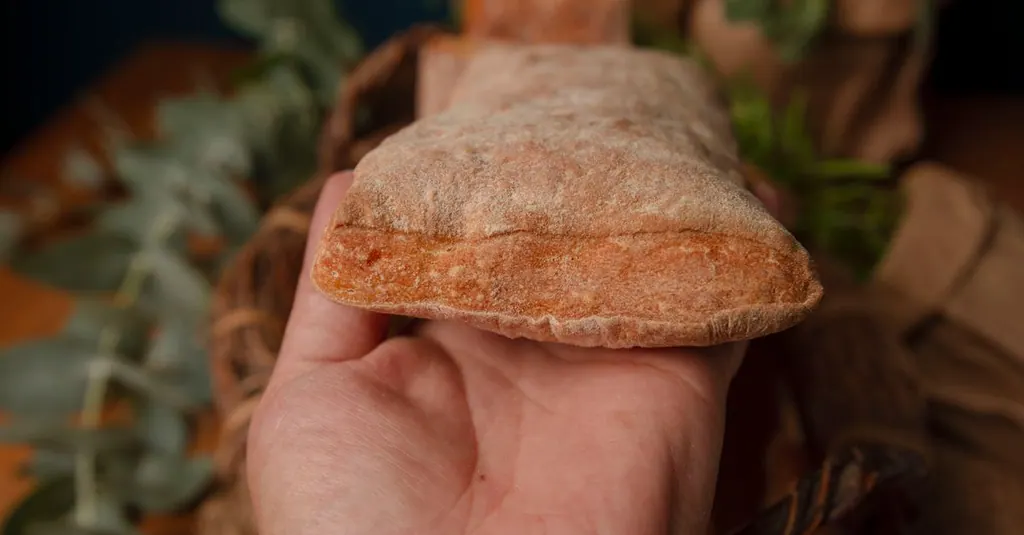
Ciabatta is what happens when a dough is almost too wet to handle: the water makes the big glossy holes and the crackly crust. The home method is no-knead: an overnight batter-like dough, folded a few times, cut into rough rectangles and baked hot. Uneven, floury and irregular is the look. They're meant to resemble slippers, not dinner rolls.
Everything you need
- 3 cups (390 g) bread flour
- ½ tsp instant yeast
- 1½ tsp fine salt
- 1½ cups + 2 tbsp (385 g) cool water
- 1 tbsp (14 g) olive oil
- ¼ cup (42 g) semolina or flour, for the bench
Weigh, don't scoop. Measuring flour by cups can overpack it and dry out your bake. Tap any ingredient to open its converter.
Method
0 of 6 done-
The night before: stir the flour, yeast, salt, water and oil into a wet, shaggy dough. It should look closer to thick batter than bread dough. Cover and leave at room temperature 12 to 16 hours.
For this step
- 3 cups (390 g) bread flour
- ½ tsp instant yeast
- 1½ tsp fine salt
- 1½ cups + 2 tbsp (385 g) cool water
- ¼ cup (42 g) semolina or flour
-
The dough will be bubbly, tripled and alive. With a wet hand, fold it over itself in the bowl four times, rotating between folds. Rest 30 minutes, then fold once more.
-
Heat the oven to 230°C / 450°F with a tray inside. Flour the bench heavily with semolina.
For this step
- 3 cups (390 g) bread flour
- ¼ cup (42 g) semolina or flour
-
Pour the dough onto the semolina and dust the top. Without degassing it, pat gently into a rough 20 x 30 cm slab.
For this step
- ¼ cup (42 g) semolina or flour
-
Cut into 8 rectangles with a floured scraper or knife in single decisive strokes, and stretch each slightly as you transfer it, floury side up, to squares of baking paper.
For this step
- 3 cups (390 g) bread flour
- ¼ cup (42 g) semolina or flour
-
Slide onto the hot tray and bake 20 to 24 minutes until crackled and gold. The rolls should feel weightless for their size. Cool 20 minutes: the crumb is still setting.
For this step
- 1½ cups + 2 tbsp (385 g) cool water
Tap a step to check it off. Your place is saved on this device.
Worth knowing
- Handle the risen dough like it's asleep and you love it. Every rough press knocks out the holes the overnight rise spent twelve hours building.
- Wet hands and a floury bench are the two tools. Ciabatta dough sticks to dry hands and slides over wet ones.
Make it your own
- Fold in a handful of chopped olives or rosemary at the first folding.
- Bake the slab whole as one large ciabatta loaf, 26 to 30 minutes.
Storing & freezing
The crust is best within hours. Airtight for 2 days, refreshed 4 minutes at 190°C, or split and frozen for 2 months. Day-two ciabatta is the correct panini bread.
Frequently asked
Why is ciabatta dough so wet?
The high hydration creates the open, holey crumb and the thin crackly crust. It's unmanageable by kneading and shaped instead by folds and flour, on purpose.
Why did my ciabatta come out dense?
The dough was degassed at shaping or under-fermented. Give it the full overnight rise, and cut and move the slab like it might explode, because in a sense it does.
Cooking in a different unit? Use the cups ↔ grams converter or the recipe scaler to halve or double this recipe.
More to cook
A note on cooking safely. Recipes are provided for informational purposes only and are not medical or nutritional advice. Cooking times, temperatures and quantities are suggestions: use your own judgement, and check that meat, poultry, fish and eggs are properly cooked before serving.
Consult a qualified healthcare professional before making dietary changes, particularly if you have allergies, a medical condition or specific nutritional requirements.