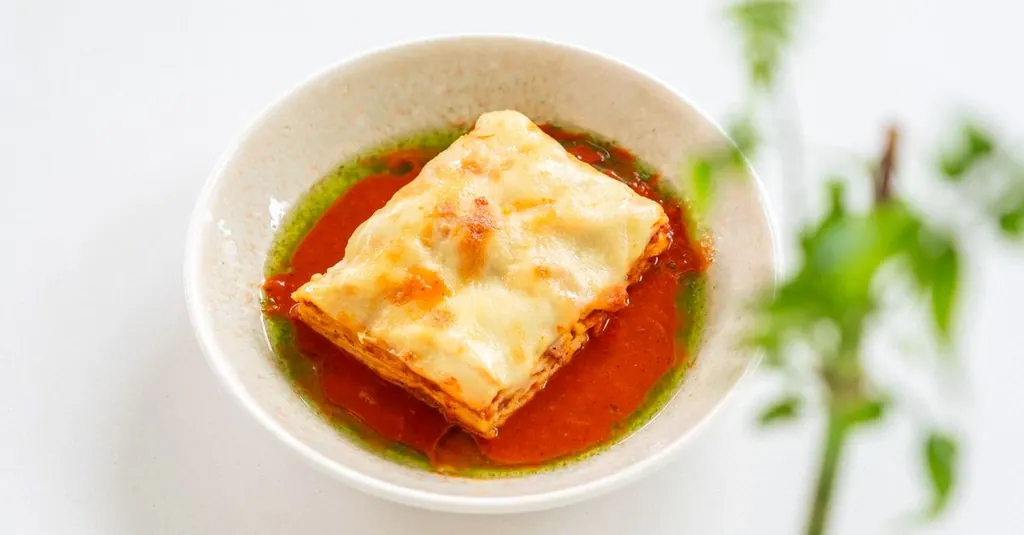
Vegetable lasagne fails when the vegetables are steamed cubes in tomato water. It succeeds when they're roasted hard first, which concentrates them into something worth layering. Aubergine, courgette, peppers and red onion go in at full heat, then meet a proper béchamel and good tomato sauce in the standard stack. Sunday afternoon food, in the best way.
Everything you need
- 1 large aubergine (eggplant), in 2 cm chunks
- 2 courgettes (zucchini), in thick half moons
- 2 red peppers, in chunks
- 1 red onion, in wedges
- 3 tbsp (41 g) olive oil
- 2½ cups passata or crushed tomatoes
- 3 cloves garlic, crushed
- 2 tsp dried oregano
- ¼ cup (57 g) unsalted butter (for the béchamel)
- ¼ cup (31 g) all-purpose flour (for the béchamel)
- 3 cups (720 g) milk (for the béchamel)
- ¼ tsp ground nutmeg
- about 12 lasagne sheets
- 1½ cups (170 g) mozzarella, grated
- ½ cup (50 g) parmesan, grated
Weigh, don't scoop. Measuring flour by cups can overpack it and dry out your bake. Tap any ingredient to open its converter.
Method
0 of 6 done-
Heat the oven to 220°C / 425°F. Toss all the vegetables with the oil and plenty of salt across two trays (crowded vegetables steam) and roast 25 to 30 minutes until browned at the edges.
-
Simmer the passata with the garlic, oregano and a pinch of sugar for 10 minutes. Fold the roasted vegetables through it.
For this step
- 2½ cups passata or crushed tomatoes
- 3 cloves garlic
- 2 tsp dried oregano
-
Béchamel: melt the butter, stir in the flour for a minute, whisk in the milk gradually and simmer to a coating sauce. Season with the nutmeg, salt and half the parmesan.
For this step
- ¼ cup (57 g) unsalted butter (for the béchamel)
- ¼ cup (31 g) all-purpose flour (for the béchamel)
- 3 cups (720 g) milk (for the béchamel)
- ¼ tsp ground nutmeg
- ½ cup (50 g) parmesan
-
Drop the oven to 190°C / 375°F. In a deep 23 x 33 cm dish, layer: vegetable sauce, pasta, béchamel, and repeat, finishing with a full béchamel blanket.
-
Top with the mozzarella and remaining parmesan.
For this step
- 1½ cups (170 g) mozzarella
- ½ cup (50 g) parmesan
-
Bake 40 to 45 minutes until bronzed and bubbling at the corners, and a knife slides through the pasta layers without resistance. Rest 15 full minutes: lasagne cut hot is soup, lasagne rested is architecture.
For this step
- about 12 lasagne sheets
Tap a step to check it off. Your place is saved on this device.
Worth knowing
- The 15 minute rest is structural, not optional. The layers set as the starches cool slightly, which is the difference between a slice and a ladleful.
- Two trays for roasting. One crowded tray steams the vegetables grey and the whole dish inherits the wateriness.
Make it your own
- A layer of wilted spinach or crumbled feta among the vegetables.
- Add a jar of drained artichokes to the roasting tray for the luxury version.
Storing & freezing
Better on day two, like all lasagne: fridge for 3 days, portions reheated until piping. Freezes baked or unbaked for 3 months. This is the correct dish to deliver to someone having a hard week.
Frequently asked
How do you keep vegetable lasagne from being watery?
Roast the vegetables hard first at high heat. Roasting evaporates their water and concentrates flavour. Raw or steamed vegetables release everything into the layers instead.
Do lasagne sheets need boiling first?
Dried no-boil sheets work if both sauces are slightly loose and every sheet is fully covered. Regular dried sheets want 2 minutes of softening in boiling water first.
Cooking in a different unit? Use the cups ↔ grams converter or the recipe scaler to halve or double this recipe.
More to cook
 Savoury Mains
Cheesy Baked Ziti
Saucy pasta baked under a blanket of melted mozzarella.
Savoury Mains
Cheesy Baked Ziti
Saucy pasta baked under a blanket of melted mozzarella.
 Savoury Mains
Creamy Baked Mac and Cheese
A proper roux-based cheese sauce, baked with a crunchy top.
Savoury Mains
Creamy Baked Mac and Cheese
A proper roux-based cheese sauce, baked with a crunchy top.
 Savoury Mains
One-Pan Chicken and Vegetable Traybake
Chicken thighs roasted with potatoes and peppers on one tray.
Savoury Mains
One-Pan Chicken and Vegetable Traybake
Chicken thighs roasted with potatoes and peppers on one tray.
A note on cooking safely. Recipes are provided for informational purposes only and are not medical or nutritional advice. Cooking times, temperatures and quantities are suggestions: use your own judgement, and check that meat, poultry, fish and eggs are properly cooked before serving.
Consult a qualified healthcare professional before making dietary changes, particularly if you have allergies, a medical condition or specific nutritional requirements.