Air Fryer Sweet and Sour Pork
Crunchy cornflour-coated pork tossed in a glossy pineapple sauce.
 Loved this recipe?
The Air Fryer Cookbook, 100 recipes
Every ingredient in cups and grams, with a photo for every recipe. 206 pages, instant PDF.
Get it $3+ →
Loved this recipe?
The Air Fryer Cookbook, 100 recipes
Every ingredient in cups and grams, with a photo for every recipe. 206 pages, instant PDF.
Get it $3+ →
Before You Start
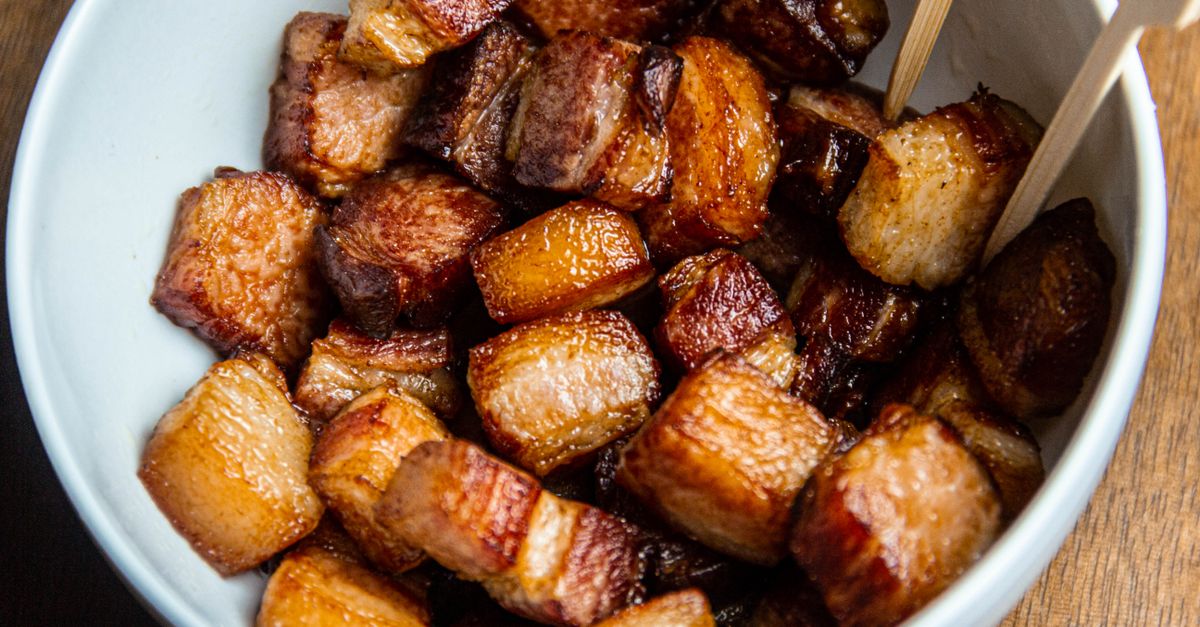
The takeaway version is deep fried twice. The air fryer gets close enough with a cornflour coating and a spritz of oil, and you keep your kitchen clean. Toss the pork in the sauce at the very last second, or the coating you worked for goes soft.
Instructions
-
Toss the pork with the soy sauce and beaten egg, then tip in the cornstarch and mix until every piece is thickly and dryly coated. Shake off the excess.
-
Preheat the air fryer to 200°C / 400°F for 3 minutes. Lay the pork in a single layer, not touching, and spray it generously with oil.
-
Air fry for 10 minutes, turning and re-spraying halfway. Any dry white patches of cornstarch will stay powdery, so spray them.
-
Add the pepper chunks to the basket and cook another 5 to 6 minutes until the pork is deep golden and the peppers have blistered edges.
-
Meanwhile simmer the vinegar, sugar, ketchup, garlic and pineapple in a small pan for 4 minutes until syrupy enough to coat a spoon.
-
Tip the hot pork and peppers into the sauce, toss for 20 seconds, and serve immediately over rice.
Tap a step to check it off. Your place is saved on this device.
♨️ Air fryer notes
- Cook at 200°C / 400°F and preheat for 2 to 3 minutes for the crispiest result.
- Keep everything in a single layer with space around each piece. Overcrowding steams food instead of crisping it, so cook in batches if your basket is small.
- Shake or turn halfway, and check a few minutes early, since air fryers cook faster than ovens and every model runs slightly differently.
💡 Cook's tips
- Spray, don't drizzle. Pooled oil makes the coating greasy and patchy, while a fine mist crisps the whole surface evenly.
- Pork shoulder stays juicy through this. Loin is leaner and dries out badly in the last few minutes.
🔀 Make it your own
- Use chicken thigh instead, cooking for 12 minutes total rather than 16.
- Add a splash of the pineapple juice and a spoon of chilli sauce to the pan for a sharper, hotter sauce.
📦 Storing & reheating
Refrigerate for 3 days, keeping sauce and pork separate if you can. Re-crisp the pork at 200°C for 4 minutes before saucing.
❓ Frequently asked
How many grams is a cup of cornstarch?
About 120 g per US cup, so the ½ cup here is roughly 60 g. Cornstarch is what gives the shatter, so don't swap it for flour.
Can I use frozen pork?
Defrost it fully first. Frozen pork releases water into the coating and you end up with a pale, pasty crust instead of a crisp one.
Adapting your own recipe? Use the oven to air fryer converter for temp and time, or the recipe scaler to halve or double this.
More air fryer recipes
Kit that makes this foolproof
A few inexpensive bits that get you crispier results with less mess.
 A roomy air fryer
A larger basket means fewer batches and crispier results.
A roomy air fryer
A larger basket means fewer batches and crispier results.
 Check price →
 Perforated liners
Less sticking and mess, without blocking the airflow.
Check price →
Perforated liners
Less sticking and mess, without blocking the airflow.
Check price →
 Silicone tongs
Turn and lift without scratching the non-stick basket.
Check price →
Silicone tongs
Turn and lift without scratching the non-stick basket.
Check price →
As an Amazon Associate, GramCups earns from qualifying purchases, at no extra cost to you.