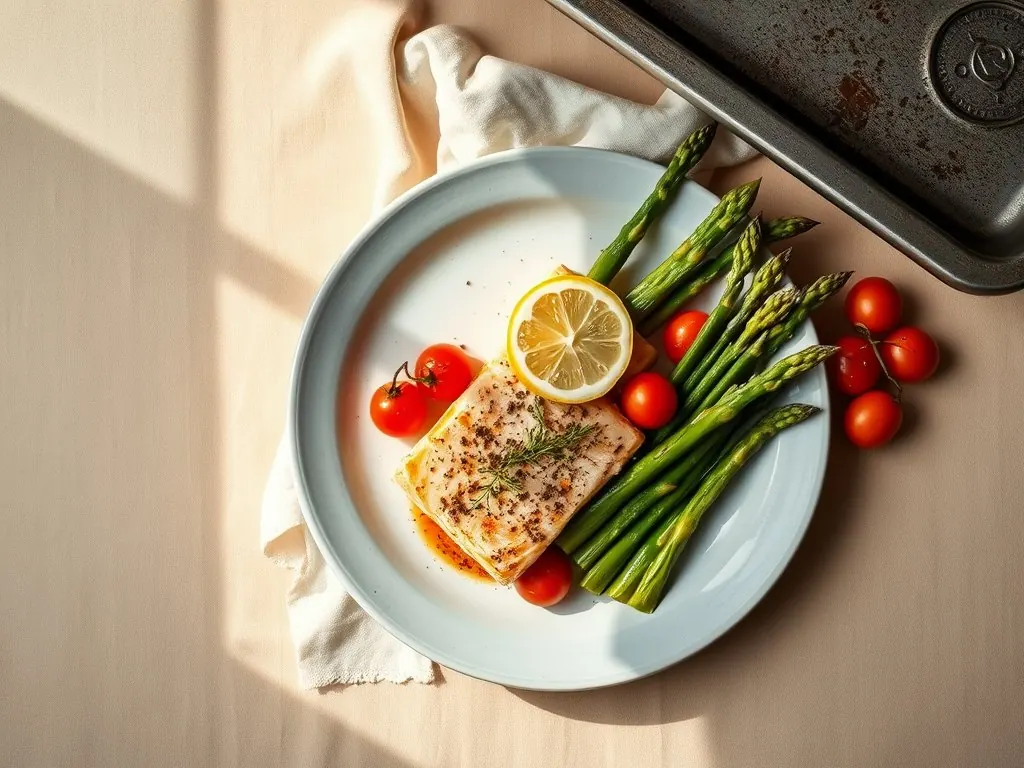
The vegetables get a head start because salmon needs almost no time at all. Overcooked salmon is chalky and there is no coming back from it, so pull the tray when the fish still looks very slightly translucent at the thickest point. It carries on cooking on the way to the table.
Everything you need
- 2 × 150 g (300 g) salmon fillets
- 250 g asparagus, woody ends snapped off
- 200 g cherry tomatoes
- 1 lemon, half sliced, half juiced
- 2 tbsp fresh dill, chopped
- 2 cloves garlic, sliced
- 2 tbsp olive oil
Weigh, don't scoop. Measuring flour by cups can overpack it and dry out your bake. Tap any ingredient to open its converter.
Method
0 of 5 done-
Heat the oven to 200°C / 400°F. Toss the tomatoes and garlic with half the oil on a tray and roast for 8 minutes until the tomatoes begin to split.
For this step
- 200 g cherry tomatoes
- 2 cloves garlic
-
Add the asparagus, push everything to the sides and sit the salmon fillets in the middle.
For this step
- 2 × 150 g (300 g) salmon fillets
- 250 g asparagus
-
Brush the fish with the rest of the oil, season, and lay a lemon slice on each fillet.
For this step
- 1 lemon
-
Roast for another 10 to 12 minutes. Press the thickest part of a fillet with a fork. It should just begin to flake.
-
Squeeze over the lemon juice, scatter with dill and serve straight from the tray.
For this step
- 1 lemon
- 2 tbsp fresh dill
Tap a step to check it off. Your place is saved on this device.
Worth knowing
- Thicker fillets need a minute or two more. Thin tail end pieces need less, so check them early.
- Snap the asparagus rather than cutting it. It breaks naturally where the woody part ends.
Nutrition: estimated from typical ingredient values, not laboratory tested. Check the labels on what you actually buy.
Cooking in a different unit? Use the cups ↔ grams converter or the recipe scaler to halve or double this recipe.
More to cook
 Fish
Miso Butter Salmon with Greens
Sweet, salty, glossy salmon on the table in twenty five minutes.
Fish
Miso Butter Salmon with Greens
Sweet, salty, glossy salmon on the table in twenty five minutes.
 Rice Bowls
Ginger Scallion Chicken Rice Bowl
A raw ginger and spring onion sauce that makes plain chicken taste like a restaurant.
Rice Bowls
Ginger Scallion Chicken Rice Bowl
A raw ginger and spring onion sauce that makes plain chicken taste like a restaurant.
 Stir Fries
Crispy Tofu in Black Bean Sauce
Cornflour-coated tofu that actually stays crisp under the sauce.
Stir Fries
Crispy Tofu in Black Bean Sauce
Cornflour-coated tofu that actually stays crisp under the sauce.
A note on cooking safely. Recipes are provided for informational purposes only and are not medical or nutritional advice. Cooking times, temperatures and quantities are suggestions: use your own judgement, and check that meat, poultry, fish and eggs are properly cooked before serving.
Consult a qualified healthcare professional before making dietary changes, particularly if you have allergies, a medical condition or specific nutritional requirements.